











Intelligent Search — Making Search more comprehensive and complete
Product Design Lead, Microsoft ・ 2018
Intelligent answers leverage the latest state of the art machine reading comprehension, to read and analyze billions of documents to understand the web and help you more quickly and confidently get the answers you need. Bing now uses deep neural networks to validate answers by aggregating across multiple reputable sources, rather than just one, so you can feel more confident about the answer you’re getting. I led the design and strategy for the new set of Intelligent Answers.
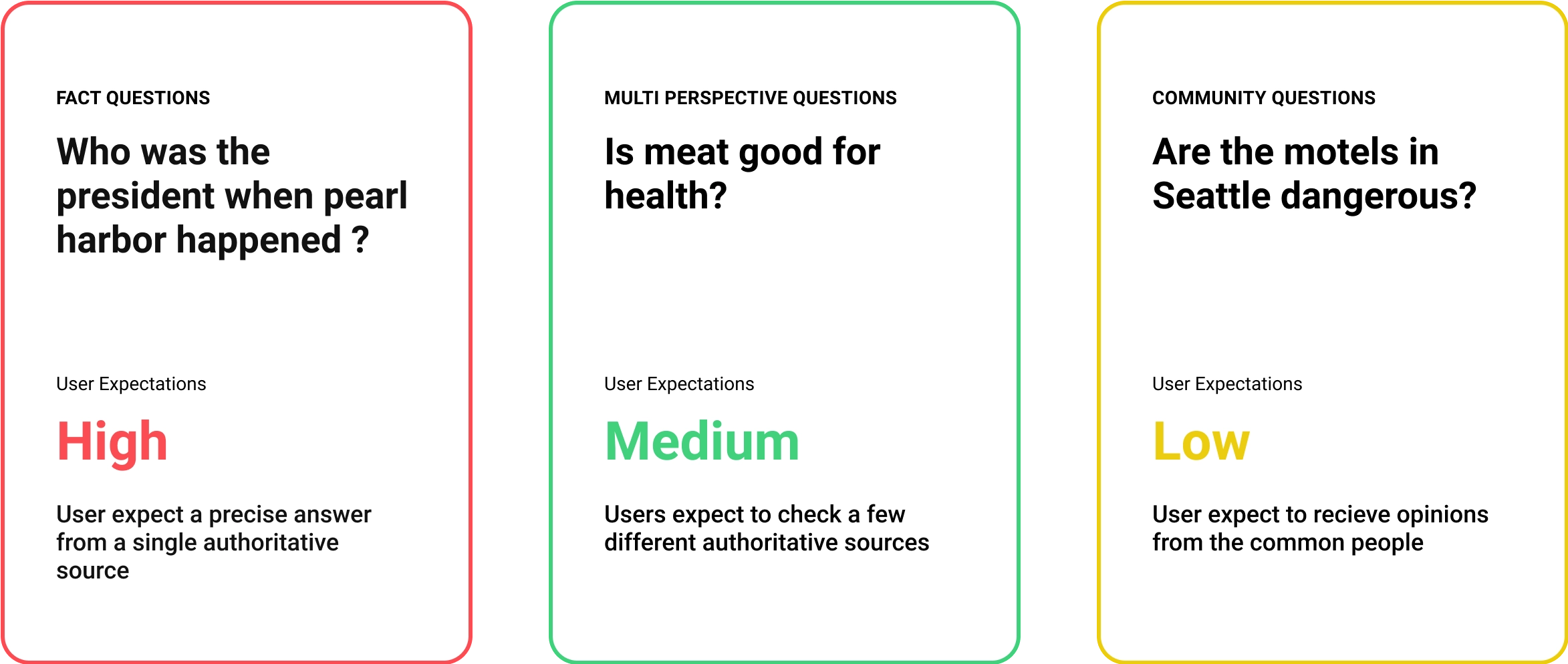
Understanding user expectations
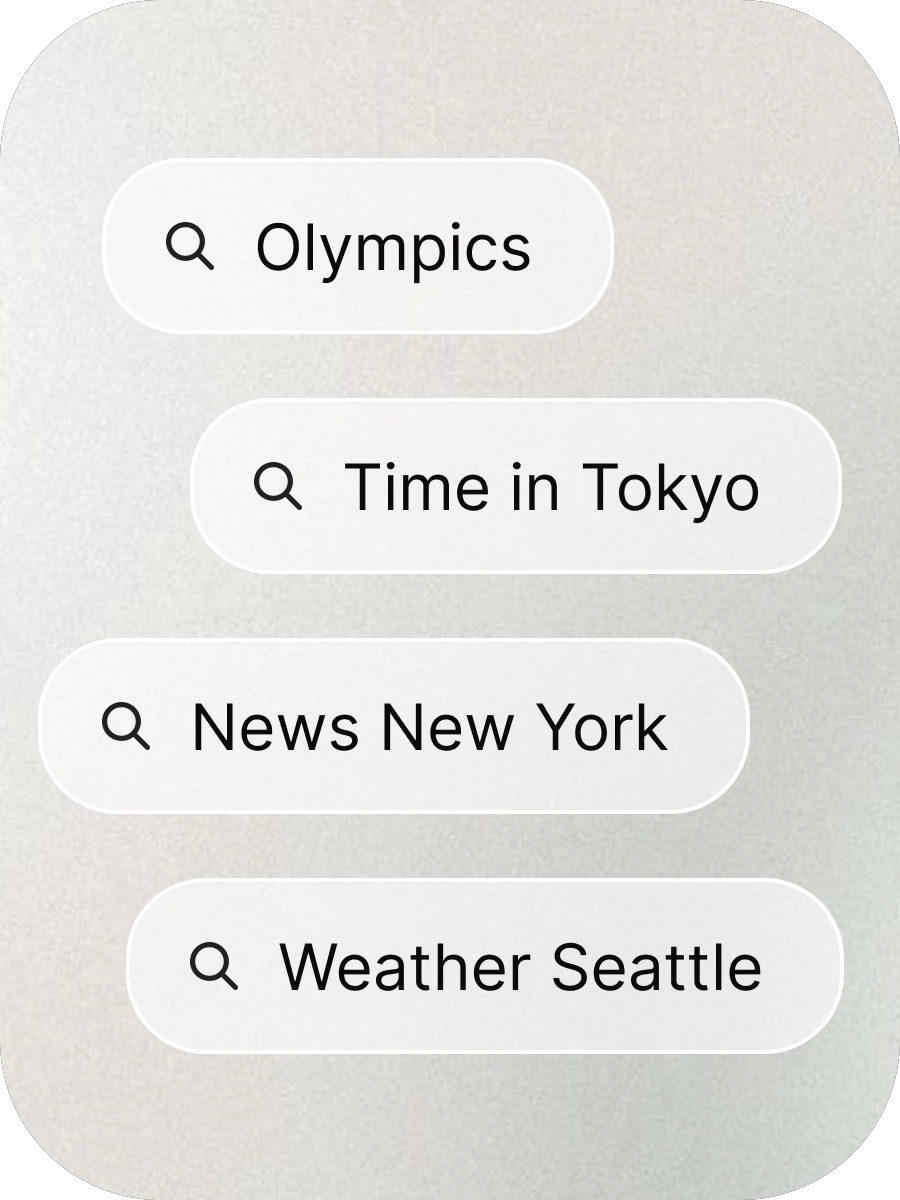
As we started the project it was important to take a deeper look at the types of questions users have been asking and what their motivation and expectations could be from a search engine or the web. The program managers helped in classifying different query patterns that users have been asking on Bing. The research team helped drive a few online focus groups to understand what the expectations were as users asked those questions.
Perspectives from the web
Just giving one perspective was the norm. With this approach we wanted to give users a holistic picture and bring both sides of the argument.
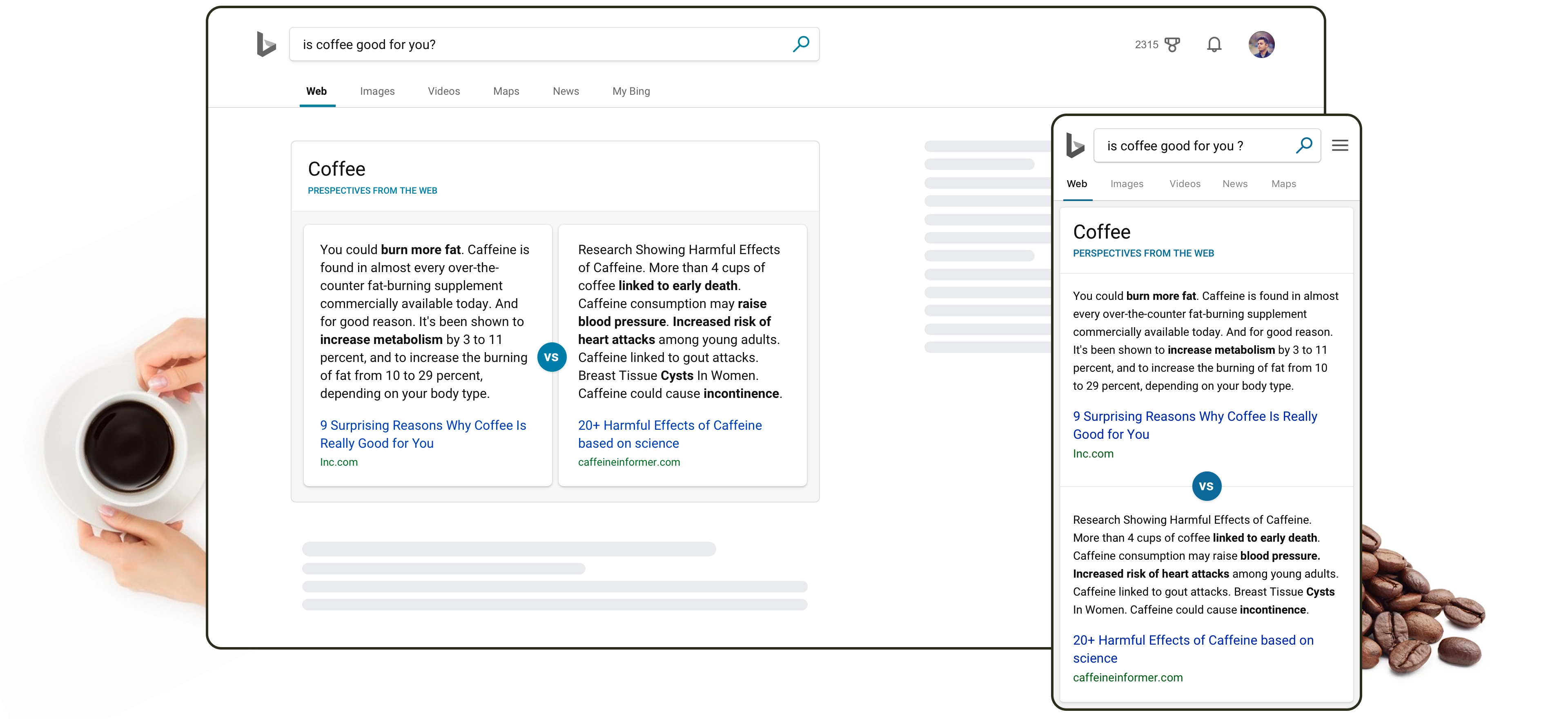
Get perspectives on thousands of questions

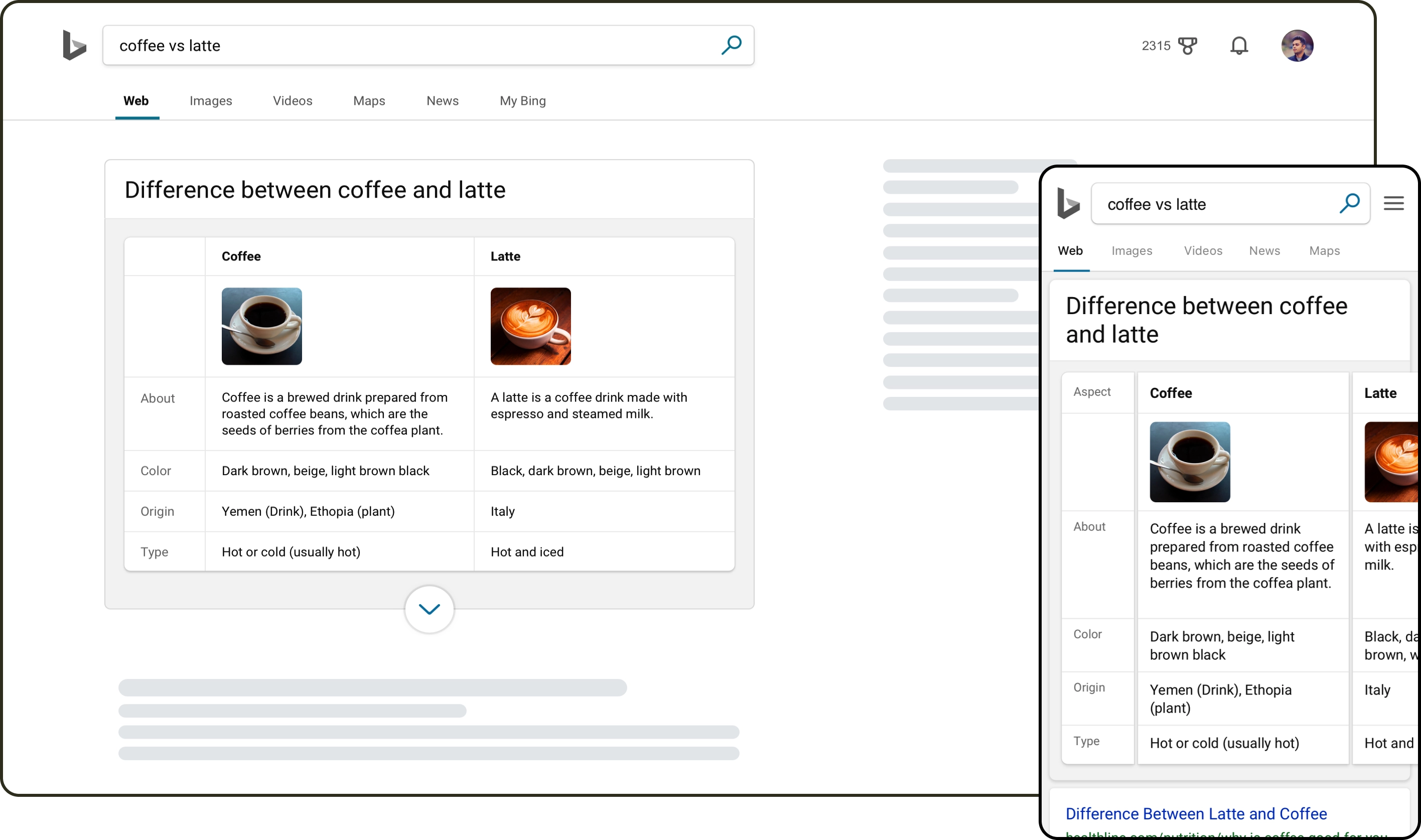
Compare entities on the web
A simple experience which would bring out the key differentiators for comparing two entities on the web.
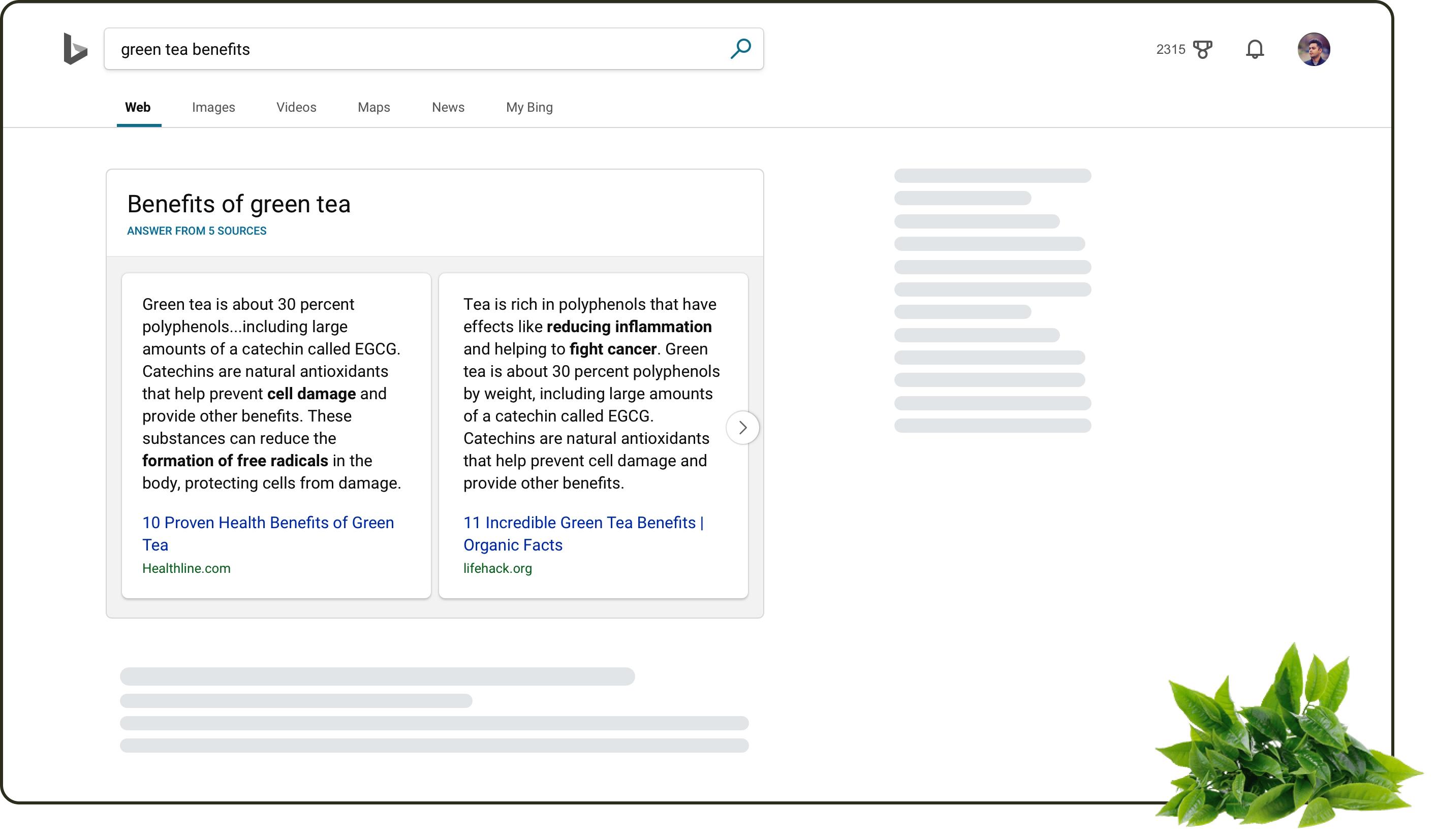
Answers from multiple sources
This experience focused on bringing concise answers from multiple sources. This saved a lot of time for users and provided an easy way to view insights.
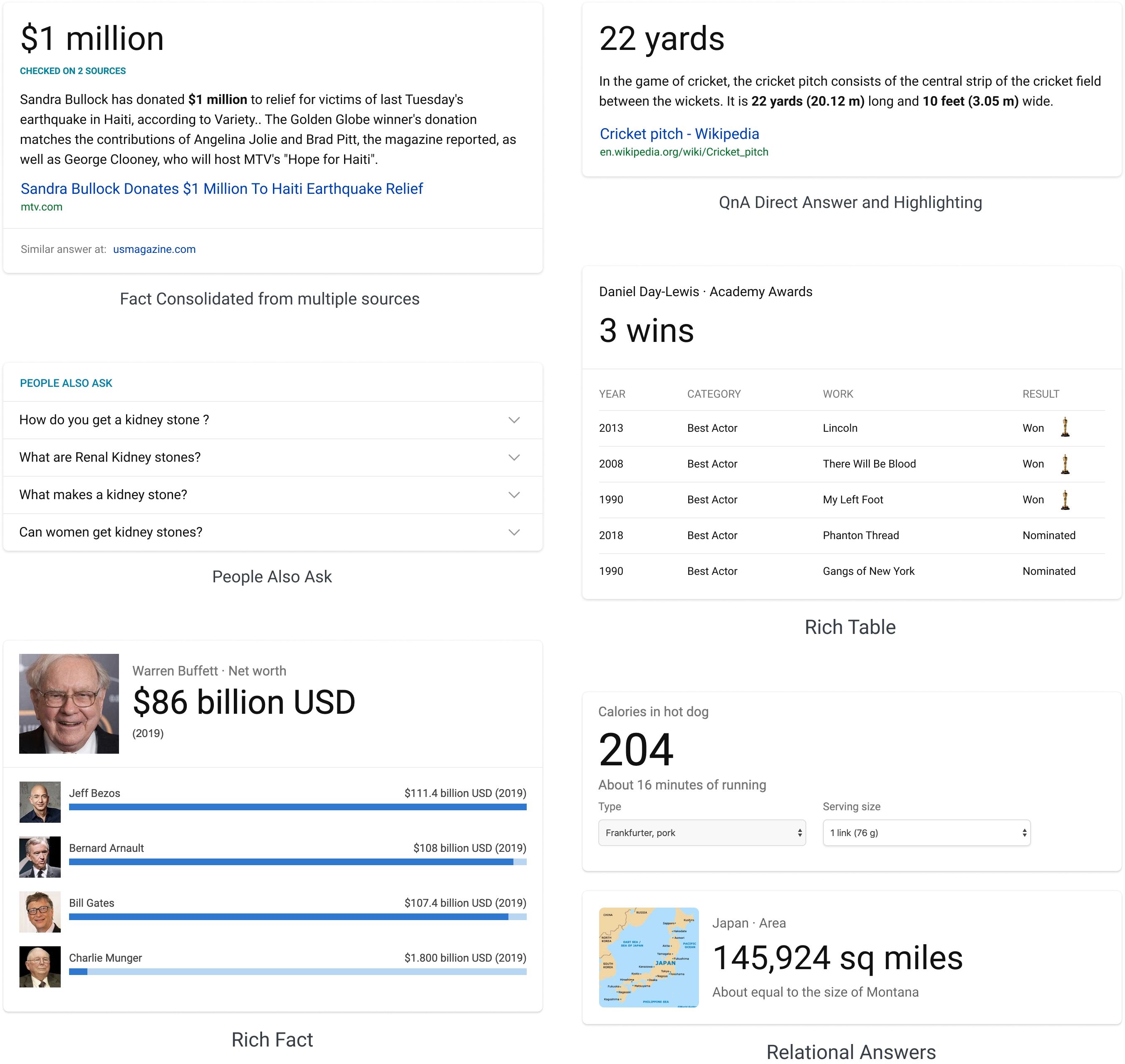
Life is full of questions
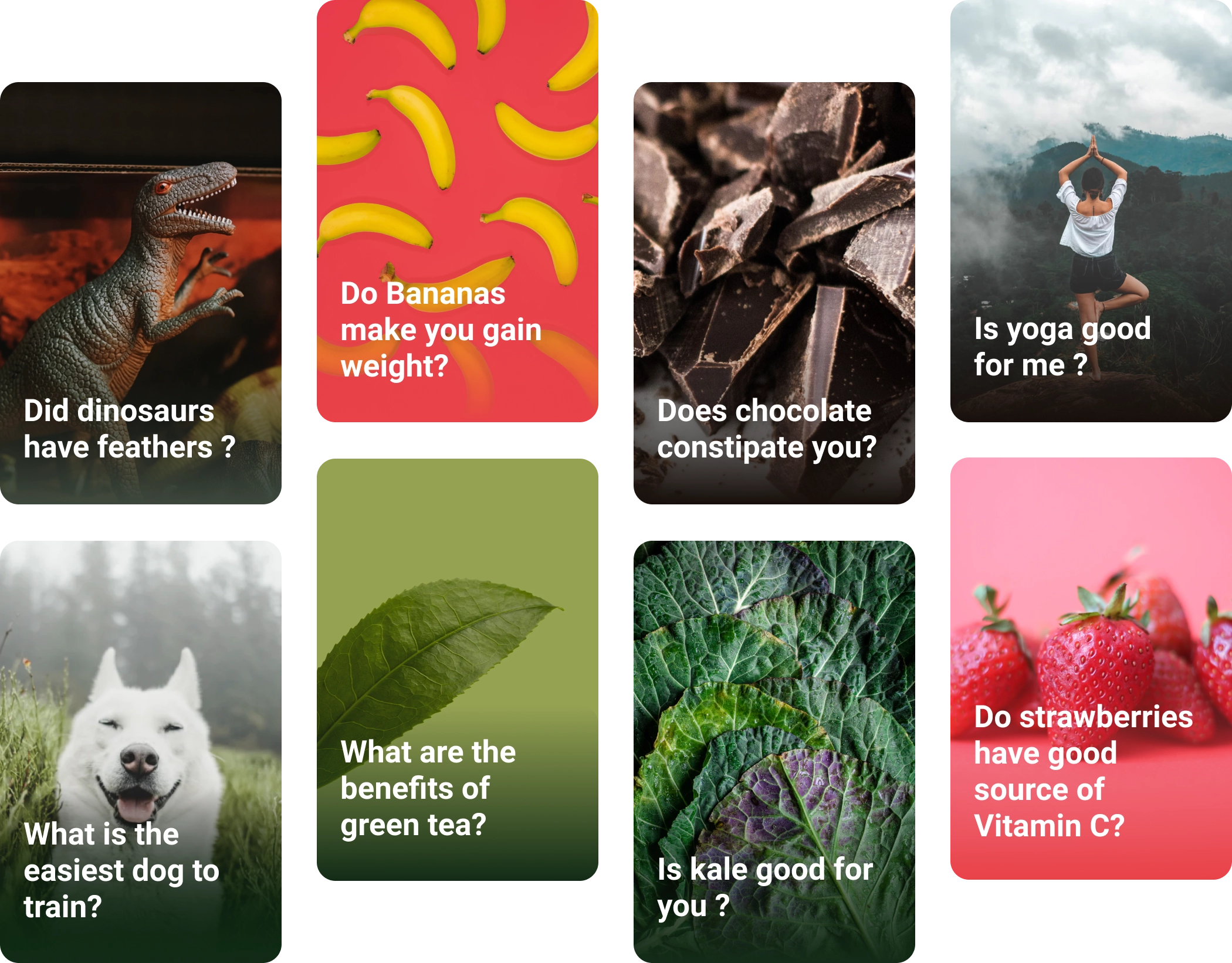
Lot more templates that helped answer questions in a direct and concise way.
In market
Answers in motion
Impact
Impact of the project was substantially high, as we made search more intelligent and helpful in common and complex questions. We saw increased engagement, a drop in short clicks and more repeat users.